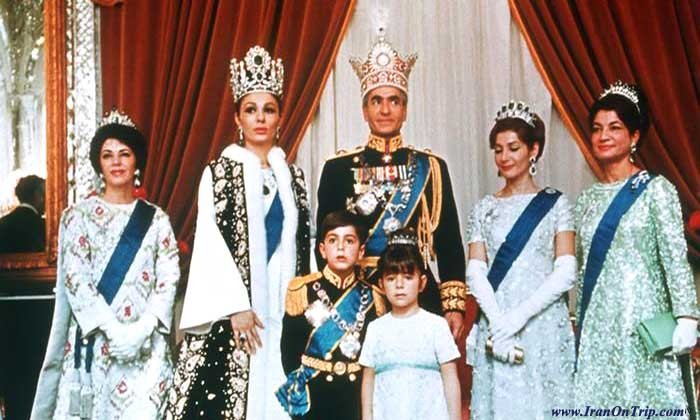
Propaganda vs. Reality
"Shah gave women freedom."
"Iran was prosperous."
"Reza Pahlavi supports democracy."
"Reza Pahlavi supports
democracy."
“Iran was the Switzerland of the Middle East — booming with oil wealth.”
“Iran was the Switzerland of
the Middle East — booming
with oil wealth.”
Reza Shah modernized Iran and brought progress.
Reza Shah modernized Iran
and brought progress.
The Pahlavi monarchy was democratic.
The Pahlavi monarchy was
democratic.
Mohammad Reza Shah left Iran to avoid bloodshed.
Mohammad Reza Shah left
Iran to avoid bloodshed.
SAVAK was just an intelligence agency.
SAVAK was just an intelligence
agency.
The 2,500-Year Celebration was a patriotic event.
The 2,500-Year Celebration
was a patriotic event.
The Shah made Iran independent.
The Shah made Iran
independent.
"In a man's life, women count only if they are beautiful, graceful, and know how to stay feminine. You may be equal in the eyes of the law, but not in ability. You have never produced a Michelangelo or a Bach or even a great cook. You are schemers, you are evil, all of you."
- Mohammed Reza Pahlavi
60% lived below the poverty line.
Refuses to condemn monarchy crimes.
The Shah's land policies favored large landowners and the elite, exacerbated economic disparities and bypassing the majority of Iranians led to neglect for the agricultural sector, rampant corruption, and urban overcrowding contributed to widespread poverty during this period.
Reza Pahlavi has never spoken out against or acknowledged the abuses committed by his father, Mohammad Reza Shah, or his grandfather, Reza Shah. He has also never issued an apology or any remorse for the dictatorship or the actions of SAVAK.
70% of Iranians lived in poverty during the Shah’s final decade. Massive corruption and wealth inequality. The 1976 census showed widespread illiteracy and malnutrition.
While Reza Shah is often credited with launching modernization projects like the Trans-Iranian Railway, the reality was far more problematic. The railway did not connect Iran’s major cities or serve the needs of the Iranian people—it was built primarily to give Britain and Russia logistical access through Iran. The route, running from the Persian Gulf to the Caspian Sea, bypassed key population centers and instead served foreign geopolitical and military interests. Worse, the project consumed a massive share of Iran’s national budget and was financed by burdensome taxes on basic goods, placing a heavy burden on ordinary Iranians. The result was a costly project that brought little benefit to the public while enriching foreign powers and a small elite.
Both Reza Shah and Mohammad Reza Shah ruled with absolute authority. Political parties were banned, elections were rigged, and dissent was crushed through censorship and violence.
He fled in 1979 after months of nationwide protests and loss of support. His regime had already killed thousands during uprisings, including the 1978 Black Friday massacre, where hundreds of peaceful protesters were killed.
SAVAK, established with CIA and Mossad assistance, was responsible for widespread torture, arbitrary arrests, and executions of political opponents.
The 1971 celebration was an extravagant display costing millions, while many Iranians lived in poverty. It was criticized even by state-controlled outlets for its extravagance.
Iran under the Shah was heavily dependent on Western powers. He came to power after a CIA/MI6-led coup overthrew Prime Minister Mohammad Mossadegh in 1953.
Reza Pahlavi is a democratic alternative.
Reza Pahlavi is a democratic
alternative.
Reza Pahlavi has not condemned the crimes of his predecessors and has not called for the overthrow of the Islamic Republic.
Iranians seek a return to the past.
Iranians seek a return to the
past.
Protests have included chants like "Death to the oppressor, be it the Shah or the Supreme Leader," showing rejection of both monarchy and theocracy.
Supporters of the return of the Monarchy want a peaceful transition.
Supporters of the return of
the Monarchy want a peaceful
transition.
Some monarchist supporters have used fascist slogans, threats, and even praised SAVAK's torture practices, echoing authoritarianism.
Some monarchist supporters have used fascist slogans, threats, and even praised SAVAK's torture practices, echoing authoritarianism.
The Shah's regime was secular and progressive.
The Shah's regime was secular
and progressive.
While outwardly secular, the Shah empowered reactionary clerics to suppress leftist and democratic forces, laying groundwork for the rise of the Mullahs in Iran
Reza Shah was a selfless patriot.
Reza Shah was a selfless
patriot.
Reza Shah accumulated vast personal wealth through land grabs and deposited significant funds in foreign banks, prioritizing personal gain over national interest.
The White Revolution benefited all Iranians.
The White Revolution
benefited all Iranians.
The White Revolution's land reforms disrupted traditional agriculture without providing adequate support, leading to rural displacement and urban poverty.
The Pahlavi era was free from corruption.
The Pahlavi era was free
from corruption.
The White Revolution's land reforms disrupted traditional agriculture without providing adequate support, leading to rural displacement and urban poverty.
Corruption was rampant during the Pahlavi dynasty, with the royal family and close associates embezzling vast sums, leading to public outrage.
The Pahlavis promoted cultural diversity.
The Pahlavis promoted
cultural diversity.
The White Revolution's land reforms disrupted traditional agriculture without providing adequate support, leading to rural displacement and urban poverty.
Reza Shah pursued policies of Persianization, suppressing ethnic minorities and their cultures, leading to tensions and resistance.
The Pahlavi era was a golden age for Iranians.
The Pahlavi era was a golden
age for Iranians.
The 1953 coup against Dr. Mossadegh was the will of the Iranian people
The 1953 coup against
Dr. Mossadegh was the will of
the Iranian people
Mossadegh was leaning towards communism, justifying his removal.
Mossadegh was leaning
towards communism, justifying
his removal.
The Shah had the constitutional authority to dismiss Mossadegh
The Shah had the constitutional
authority to dismiss Mossadegh
The Shah's regime respected human rights and due process.
The Shah's regime respected
human rights and due process.
Many Iranians remember the Pahlavi era for its repression, corruption, and inequality, leading to a collective rejection of monarchical rule
Declassified documents reveal that the CIA and Britain's MI6 orchestrated the coup to overthrow Prime Minister Mossadegh after he nationalized Iran's oil industry, threatening Western interests. This operation, known as Operation Ajax, reinstated the Shah's power.
Mossadegh argued that under Iran's constitution, the Shah did not have unilateral authority to dismiss a prime minister without parliamentary approval. His removal was unconstitutional.
The Shah's government was marked by severe repression. Amnesty International reported numerous cases of torture and political executions
Mossadegh was a nationalist leader committed to democracy and constitutional governance.
Torture under the Shah was minimal and exaggerated by opponents.
Torture under the Shah was
minimal and exaggerated by
opponents.
Survivors and human rights organizations have documented extensive use of torture techniques by SAVAK, including electric shocks, beatings, and psychological abuse